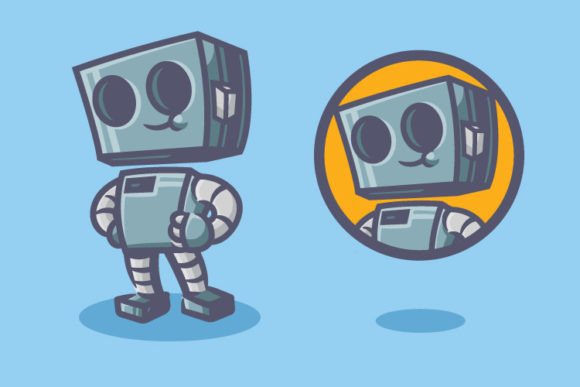
Cute Robot Mascot Retro Illustration
I have spent years reviewing digital assets for my embroidery business, and I can tell you that the difference between a design that looks great on a screen and one that stitches beautifully is often just a matter of practical judgment. When I first laid eyes on the Cute Robot Mascot Retro Illustration, it immediately caught my attention not because of its novelty, but because of its potential utility in real-world projects. As an experienced designer who values both aesthetics and stitchability, I decided to put this graphic through the paces of a typical production workflow to see how it holds up when translated from a vector file into thread.
The initial impression of the Cute Robot Mascot Retro Illustration is one of warmth and nostalgia. It captures that specific mid-century charm that has become so popular in modern craft businesses. The mood is playful yet professional, which is a rare combination. For small business owners and Etsy sellers looking to create cohesive brand identities, this design offers a personality that feels approachable without being childish. The layout is balanced, with a clear focal point that suggests it was created with structure in mind, even though it is technically a raster or vector illustration rather than a native machine embroidery file. This distinction is crucial for anyone planning to use it as a machine embroidery design.
To understand how this embroidery file would perform in a commercial setting, I visualized a specific scenario: creating a line of custom tote bags for a local artisan market. The goal was to produce a high-quality handmade product that customers would want to carry around town. In this context, the Cute Robot Mascot Retro Illustration fits perfectly. The retro aesthetic pairs exceptionally well with canvas fabrics, which are durable and provide a stable base for stitching. However, before committing to a bulk order, I had to consider how the original Graphics would translate into physical stitches.
When converting an illustration like this into an embroidery project, the devil is in the details. The Cute Robot Mascot Retro Illustration likely contains curves and rounded shapes that require careful digitizing. If the design is intended for a sweatshirt embroidery application, the density of the stitches becomes a critical factor. Too much fill stitch can make the fabric stiff and uncomfortable, while too little can result in a patchy look that fails to convey the intended character. In my experience, designs with smooth gradients or complex shading often struggle on textured fabrics unless they are simplified significantly. I would advise checking the source file carefully to ensure that the lines are clean enough to be converted into satin stitches without losing the robot's expressive features.
Another vital consideration for any commercial embroidery venture is the versatility of the design across different products. While the Cute Robot Mascot Retro Illustration works wonderfully on flat surfaces like aprons or pillow covers, curved surfaces present a unique challenge. Imagine trying to apply this design to a fitted cap. The curvature of the hat might distort the proportions of the mascot if the design is not adjusted for the specific hoop size. Furthermore, thin fabrics like those used in baby clothes require a lighter touch. A heavy design could weigh down the material, causing puckering or distortion over time. Therefore, using a proper stabilizer is non-negotiable to maintain the integrity of the finished product.
For Etsy sellers and craft business owners, the visual appeal of the final item directly impacts customer trust. A well-executed embroidered patch featuring the Cute Robot Mascot Retro Illustration can elevate a simple tote bag into a boutique-level accessory. The retro theme resonates with buyers who appreciate vintage styles, making it a strong candidate for holiday gifts or personalized items. However, the clarity of the design must be maintained. If the original illustration has fine details that get lost during the digitizing process, the robot might look blurry or indistinct. This is where testing on scrap fabric becomes essential. You need to see exactly how the thread colors interact with your chosen fabric texture before mass-producing.
There are specific situations where caution is required when working with this asset. Small hoop sizes can be particularly tricky. If the design is scaled down too much, the intricate parts of the robot's face or body might disappear entirely. Similarly, dark fabrics demand a higher thread count to ensure coverage, which can increase the risk of the fabric pulling or distorting. If you plan to use this for baby embroidery, you must ensure that the design does not have any sharp corners or dense areas that could irritate sensitive skin. Additionally, for products that require frequent washing, such as kitchen towels or work aprons, the stability of the stitches is paramount. Loose threads or weak anchoring points can lead to a poor finished product that damages your reputation.
From a branding perspective, the Cute Robot Mascot Retro Illustration offers a distinct visual identity. In a crowded marketplace, having a consistent and recognizable logo or motif helps build brand loyalty. Whether you are creating design assets for a printable mockup or selling a digital embroidery file, the quality of the underlying illustration matters. Customers can often tell when a design has been rushed or poorly adapted. A thoughtful approach to converting this illustration ensures that your custom apparel stands out for the right reasons. It signals professionalism and attention to detail, which are key drivers of buyer engagement.
Before you start stitching, there are several practical steps every designer should take. First, test the design on a piece of scrap fabric that matches your final project material. This allows you to check the stitch density and see if any adjustments are needed. Second, review the contrast between your thread colors and the fabric background. A light-colored robot on a white shirt will vanish, while a dark robot on black fabric might lose definition. Third, confirm the hoop size requirements to ensure the design fits within your machine's capabilities. Finally, inspect the small details closely. Are the eyes clear? Is the antenna defined? These tiny elements define the character.
If you are planning to sell finished items made with this design, always verify the licensing terms. Some illustrations come with restrictions on commercial use, and ignoring these can lead to legal issues. Ensure that you have the rights to use the Cute Robot Mascot Retro Illustration for merchandise sales. Also, compare the design in black and white mockups to see how it translates to monochrome threads, which are often more cost-effective for large orders. By following these guidelines, you can turn a simple digital image into a high-value small shop product that delights customers and supports your creative enterprise.
In conclusion, the Cute Robot Mascot Retro Illustration is a promising asset for any designer looking to add a touch of retro charm to their collection. Its success depends largely on how well it is adapted for the needle and thread. With careful planning, the right materials, and a keen eye for detail, this design can become the centerpiece of successful embroidery projects ranging from personal gifts to commercial merchandise. Remember, the best results come from respecting the medium and understanding the limitations of the materials you work with.